
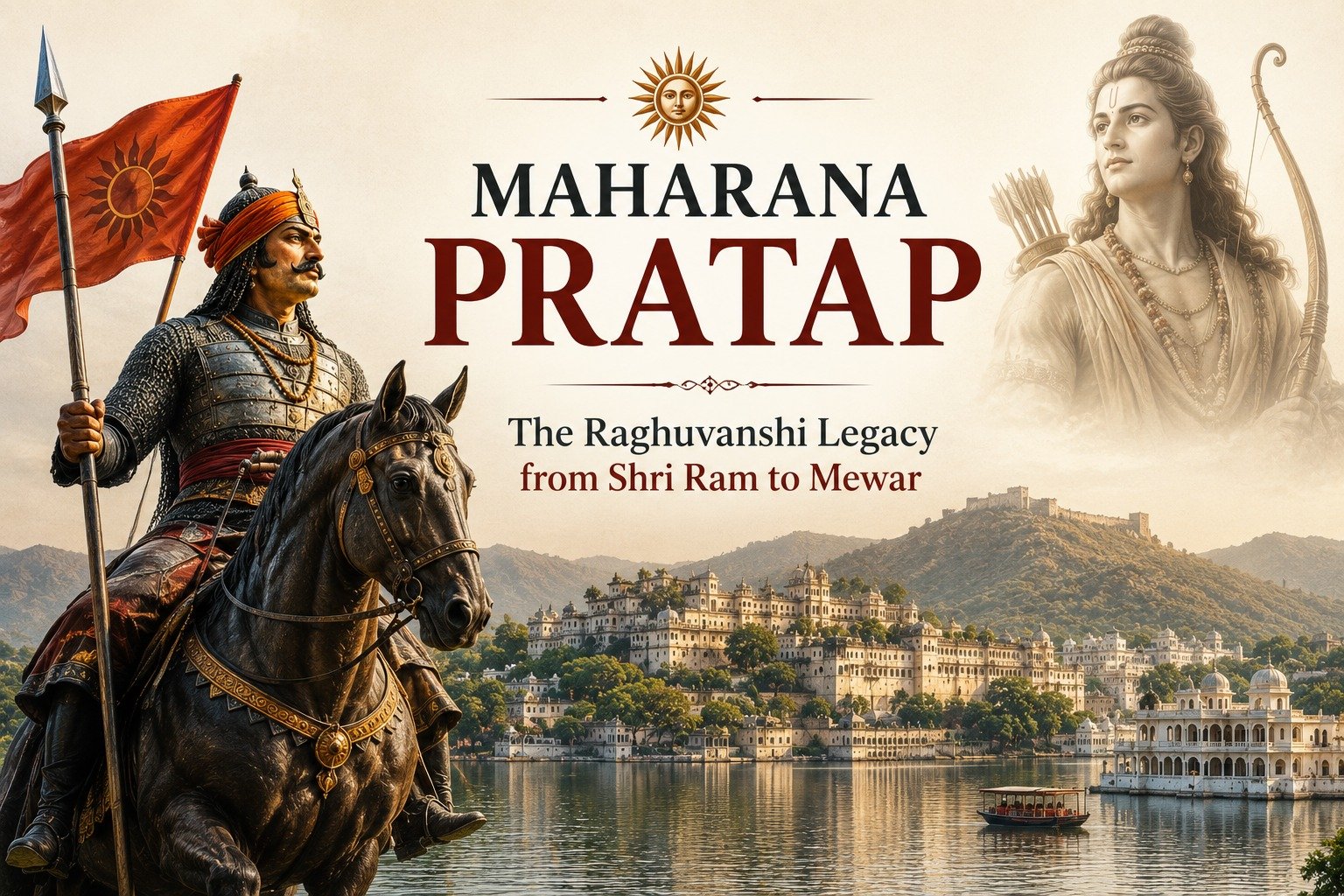
Maharana Pratap: The Raghuvanshi Legacy from Shri Ram to Mewar
Maharana Pratap is remembered as one of the most prominent rulers of Mewar, known for his courage, leadership, and determination to protect his kingdom. His legacy, however, extends beyond the battles associated with his name and is traditionally connected with the ancient Suryavanshi lineage and the Raghuvansh associated with Shri Ram. From this royal tradition to the development of Mewar and the Sisodia dynasty, understanding this lineage provides a deeper perspective on Maharana Pratap history and his place in Rajasthan’s heritage.
Maharana Pratap and the Legacy of Shri Ram’s Raghuvansh
The traditional genealogy associated with the Mewar royal house connects its ancestry with the Suryavanshi tradition, which is linked with Shri Ram and the ancient Raghuvansh. Shri Ram’s lineage has long been associated with ideals such as duty, leadership, courage, and responsibility.
This traditional connection forms an important part of the historical narrative surrounding Mewar’s rulers. Over generations, this royal tradition became associated with the ruling house of Mewar and eventually with the Sisodia dynasty.
Shri Ram and the Suryavanshi Lineage
Shri Ram is traditionally regarded as an important figure of the Suryavanshi lineage and is associated with the Raghuvansh. The continuation of this lineage through different generations forms an important part of the traditional history of several royal houses.
In the context of Mewar, this tradition provides a cultural and historical background for understanding the ancestry associated with Maharana Pratap.
From the Raghuvanshi Tradition to the Sisodia Dynasty
The history of Mewar developed over centuries through successive rulers and changing political circumstances. Within traditional accounts of its royal lineage, the early history of Mewar is connected with the broader Suryavanshi heritage.
Bappa Rawal and the Early History of Mewar
Bappa Rawal holds an important place in the traditional history of Mewar. He is associated with the early development of the kingdom and the establishment of a strong royal tradition in the region.
His legacy is significant when studying the evolution of Mewar’s political and military identity. The traditions surrounding Bappa Rawal connect the early history of the kingdom with later generations of rulers who continued to shape its identity.
Some important aspects associated with his legacy include:
- Early development of Mewar’s royal tradition
- Establishment of political authority in the region
- Association with military leadership
- A lasting place in Mewar’s historical traditions
The Sisodia Dynasty and Mewar’s Royal Identity
Over time, the Sisodia dynasty became closely associated with Mewar’s royal identity. Its rulers faced changing political conditions and challenges to the kingdom’s territory and independence.
Maharana Pratap belonged to this Sisodia royal house. His story therefore represents an important chapter within a much longer history of Mewar and its ruling tradition.
Maharana Pratap: Heir to a Long Royal Legacy
Maharana Pratap inherited a royal tradition shaped by generations of rulers and the political history of Mewar. His legacy is remembered not only through his ancestry but also through his leadership during a period of significant political change.
His historical identity can be understood through several important aspects:
- Commitment to the interests of Mewar
- Leadership during political and military challenges
- Determination to protect the kingdom’s independence
- Strategic understanding of the region
- A lasting influence on Mewar’s historical identity
Maharana Pratap’s Strategic Vision and Leadership
Maharana Pratap’s leadership extended beyond the battlefield. His historical narrative includes diplomacy, military preparation, administration, and an understanding of the geographical conditions of Mewar.
1. Diplomacy in a Changing Political Landscape
Maharana Pratap lived during a period when Mughal influence was expanding across northern and western India. His political decisions developed within this changing environment, where relationships with neighbouring states and larger political powers were important.
His approach reflected the need to balance diplomacy, political judgement, and military preparedness while protecting the interests of Mewar.
2. Military Preparation and Strategic Thinking
Training in weapons, administration, and the responsibilities of governance formed an important part of the preparation expected of a ruler. Maharana Pratap’s understanding of the local landscape also became significant to his military strategy.
The Aravalli hills and difficult terrain of Mewar could provide strategic advantages during conflict. The support and geographical knowledge of local communities, including Bhil warriors, also formed an important part of the region’s resistance traditions.
Maharana Pratap’s Legacy in Udaipur
Maharana Pratap’s legacy remains closely connected with Udaipur and the wider Mewar region. The city’s heritage sites, museums, memorials, and historical locations provide opportunities to understand the royal traditions and events that shaped the region.
Exploring Mewar’s Heritage Through Udaipur
For visitors interested in Maharana Pratap history, exploring Udaipur city tour places can provide a broader understanding of Mewar’s royal past. The region’s heritage reflects the history of its rulers, architecture, traditions, and political struggles.
For history enthusiasts, identifying the best tourist place in Udaipur may depend on their interests, but locations connected with Mewar’s royal heritage can offer particularly meaningful historical experiences.
FAQs
Q1. Was Maharana Pratap a descendant of Shri Ram?
According to the traditional genealogy associated with the Mewar royal house, its ancestry is connected with the Suryavanshi lineage traditionally associated with Shri Ram and the Raghuvansh.
Q2. What is the connection between Maharana Pratap and the Raghuvansh?
The traditional lineage of Mewar’s royal house is connected with the Suryavanshi tradition and the Raghuvansh associated with Shri Ram. Maharana Pratap belonged to this Mewar royal tradition.
Q3. Who was Bappa Rawal in Mewar’s history?
Bappa Rawal is an important figure in the traditional history of Mewar and is associated with the early development of its royal and political traditions.
Q4. How is Maharana Pratap connected with the Sisodia dynasty?
Maharana Pratap belonged to the Sisodia royal house of Mewar, which became closely associated with the political and historical identity of the kingdom.
Q5. Which places in Udaipur are connected with Maharana Pratap?
Udaipur and the surrounding Mewar region have several heritage attractions associated with the history and legacy of Maharana Pratap. Pratap Gaurav Kendra offers visitors an opportunity to explore this history through its presentation of Mewar’s cultural and historical heritage.
The Maharana Pratap history is part of a much wider historical tradition associated with Mewar. The traditional connection of its royal lineage with the Suryavanshi heritage of Shri Ram and the Raghuvansh, followed by the development of the Sisodia dynasty, provides important context for understanding his legacy. Today, this history continues to form an important part of Udaipur’s heritage and offers visitors a deeper perspective on the history and traditions of Mewar.
