
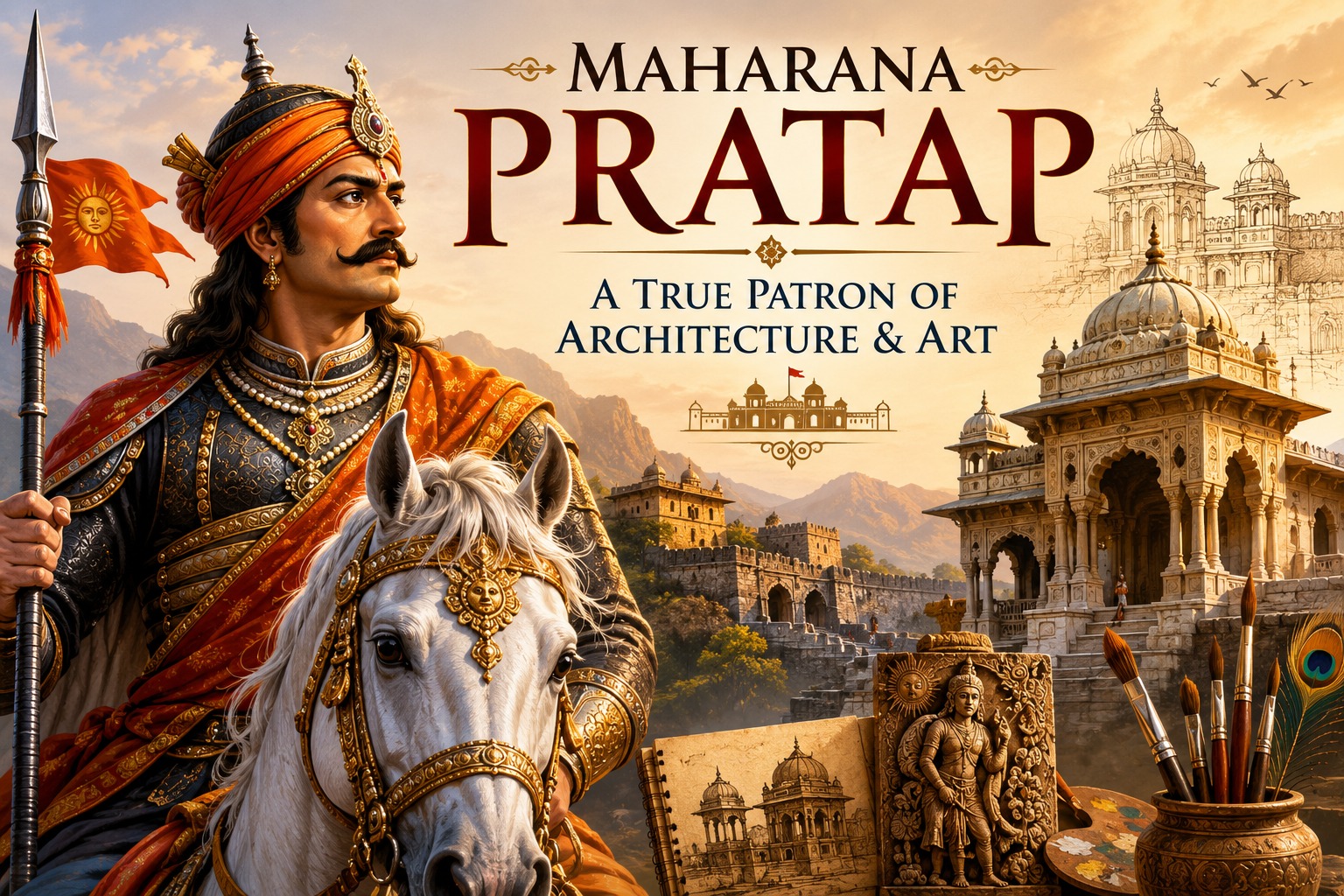
Maharana Pratap: A True Patron of Architecture and Art
Maharana Pratap is widely remembered as one of the bravest warriors in Indian history, but his contribution extended far beyond the battlefield. He was also a great admirer of art, architecture, and cultural preservation. During his reign, he encouraged the development of temples, forts, settlements, and water structures across Mewar. Even in times of continuous struggle, Maharana Pratap never ignored the importance of heritage, spirituality, and architectural growth, leaving behind a lasting cultural legacy.
Maharana Pratap’s Vision for Architecture and Culture
Maharana Pratap believed that a kingdom becomes strong not only through military power but also through cultural identity and social development. He supported the construction and restoration of temples, forts, lakes, and public settlements that strengthened the spiritual and economic life of the people.
His architectural initiatives reflected:
- Preservation of Mewar’s cultural heritage
- Development of organized settlements
- Promotion of local craftsmanship and art
1. Development of Chavand: The Capital City
One of the major architectural achievements associated with Maharana Pratap was the development of Chavand, which later became his capital. He established this town on the banks of the Chamundi (Gargal) River and transformed it into an important administrative and cultural center.
The development of Chavand included:
- Construction of residential and administrative structures
- Expansion of agricultural activities nearby
- Creation of water resources for farming and local use
The remains of Chavand still provide insight into the architectural planning and historical importance of Maharana Pratap’s rule.
2. Chamunda Mata Temple
The Chamunda Mata Temple is another important example connected with Maharana Pratap’s interest in religious architecture and heritage preservation. Historical references and inscriptions associated with the temple indicate its cultural significance during that period.
The temple is known for:
- Traditional temple architecture
- Detailed stone craftsmanship
3. Devi Temple at Zawar
The temple dedicated to the goddess in the Zawar region is also linked with the architectural and restoration activities carried out during Maharana Pratap’s time. Zawar was an important region, and the temple there represents the religious and cultural environment of Mewar.
The temple architecture reflects the artistic traditions that flourished under Maharana Pratap’s leadership. His efforts helped preserve many sacred places despite continuous political and military challenges.
4. Jhadol Region: Urban Development and Architecture
Maharana Pratap also contributed to the development of the Jhadol region. After returning from Haldighati, he stayed in nearby areas and encouraged the construction and restoration of important structures.
One of the notable developments in this region was the construction of Aavargarh Fort near the Kamalnath hills. The fort demonstrates strong architectural planning and engineering techniques suitable for hilly terrain.
Important features of the region’s development include:
Key Architectural Contributions
- Construction of Aavargarh Fort
- Restoration of ancient temples
- Water storage systems within the fort
The fort was built at a significant height and included water reservoirs that could store rainwater throughout the year. This reflects Maharana Pratap’s practical understanding of defense planning and water management.
5. Harihar Ji Temple
The Harihar Ji Temple at Badarana is another remarkable example of art and architecture associated with Maharana Pratap’s period. Historical studies suggest that the temple and its sculptures reflect the artistic excellence of ancient Mewar traditions.
The temple is especially admired for:
- Religious and cultural importance
- Preservation of ancient idol craftsmanship
The artistic style seen in the temple demonstrates the rich sculptural traditions supported during Maharana Pratap’s era. The temple remains an important heritage site representing devotion, architecture, and artistic excellence together.
Preservation of Art, Culture, and Architecture in Mewar
The architectural works connected with Maharana Pratap clearly show that he was much more than a warrior king. His vision included the protection of culture, religion, public welfare, and heritage preservation.
His contributions continue to inspire people because they represent:
- Courage with cultural responsibility
- Leadership with social development
- Architecture connected with public welfare
- Preservation of heritage during difficult times
Maharana Pratap’s contribution to architecture and art reflects the depth of his personality and leadership. Along with protecting Mewar’s freedom, he also worked towards preserving its cultural and architectural identity. From the development of Chavand to the restoration of temples and construction of forts, his efforts demonstrate a balanced vision of strength, spirituality, and civilization. Today, places connected with Maharana Pratap’s legacy, especially Pratap Gaurav Kendra, allow visitors to explore his inspiring history, bravery, and cultural contributions, making it one of the best tourist places in Udaipur for history and heritage lovers.
Frequently Asked Questions
Q1. How did Maharana Pratap contribute to architecture and art?
Maharana Pratap contributed to architecture and art by supporting the construction of forts, temples, settlements, and water structures across Mewar while preserving its cultural heritage.
Q2. Why is Chavand important in Maharana Pratap’s history?
Chavand became the capital of Maharana Pratap and served as an important administrative, cultural, and architectural center during his reign.
Q3. How do Maharana Pratap’s forts reflect his leadership?
The forts associated with Maharana Pratap reflect his strategic planning, strong defense systems, and understanding of architecture suited for difficult terrains.
Q4. Why is Pratap Gaurav Kendra popular among tourists in Udaipur?
Pratap Gaurav Kendra is popular among tourists because it showcases the life, bravery, culture, architecture, and historical legacy of Maharana Pratap through exhibitions and heritage displays.
Q5. How did Maharana Pratap preserve the identity of Mewar?
Maharana Pratap preserved the identity of Mewar by protecting its freedom, heritage sites, and supporting cultural and architectural development during challenging times.
