
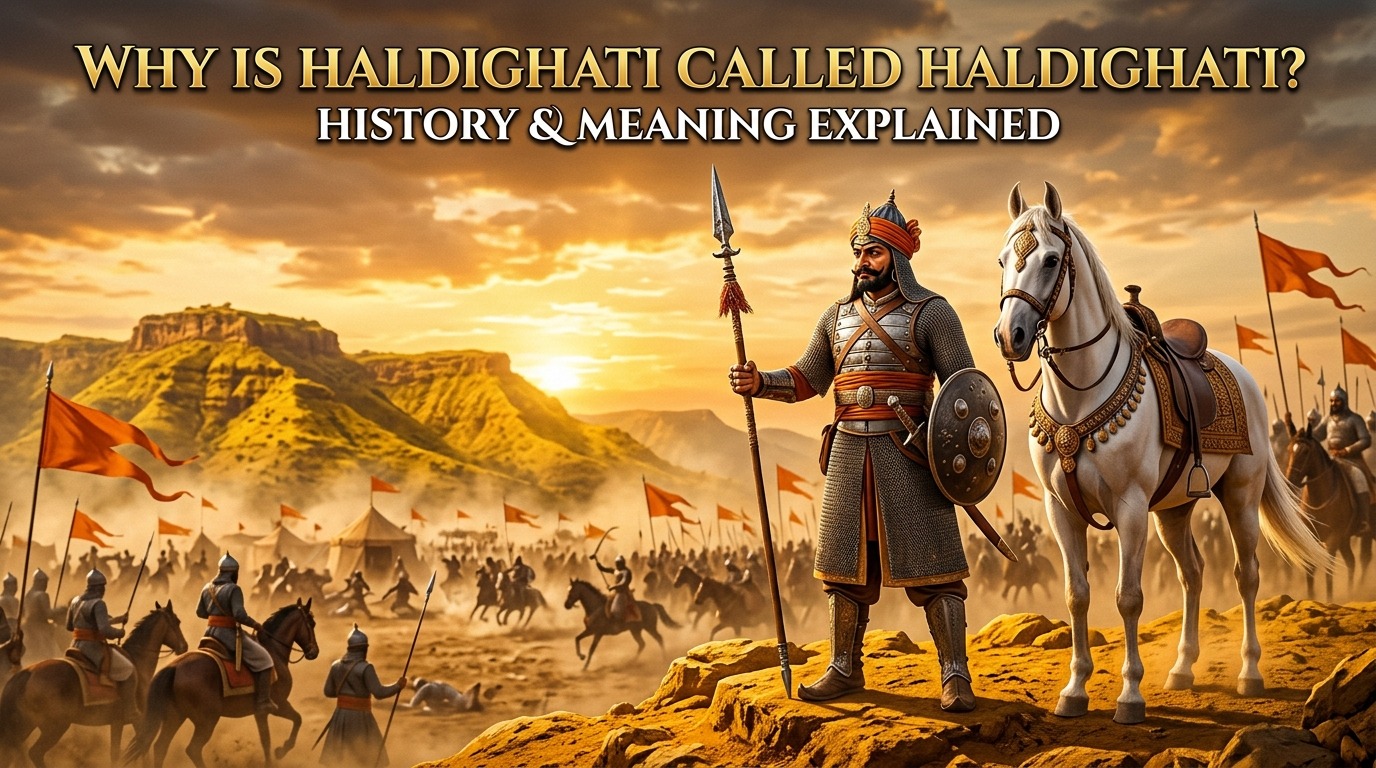
Why is Haldighati Called Haldighati? History & Meaning Explained
Haldighati is one of the most famous historical sites in Rajasthan, India, known for the legendary battle fought between Maharana Pratap and the Mughal forces led by Akbar. But have you ever wondered why this place is called “Haldighati”? The name has fascinating origins tied to both the unique geography of the area and the events of the historic battle. Located about 16 kilometers south – West of Nathdwara, Haldighati holds stories of bravery, strategy, and sacrifice that continue to inspire history enthusiasts.
The Geographic Reason Behind the Name Haldighati
Haldighati lies between the hills of Gogunda and Khamnor, forming a narrow mountain pass. Its terrain is so constricted that even a single person could barely walk alongside another, and a horse found it difficult to cross.
- The soil in this region has a distinct yellow color, resembling turmeric.
- The word “Haldi” in Hindi means turmeric, and “Ghati” means valley or pass.
- Due to the yellowish hue of the soil, this pass came to be known as Haldighati.
This geographical explanation shows that the name is not just poetic but directly tied to the natural features of the land.
The Historical Reason: Bloodshed and the Name Rakht Talai
Haldighati is not only known for its terrain but also for the fierce battle that took place here in 1576:
- Maharana Pratap’s army launched a powerful attack against the Mughal forces.
- The assault was so swift and forceful that the Mughal soldiers fled across the Banas River, sometimes as far as 10–15 kilometers away.
- The battle resulted in heavy casualties, with so much blood spilled that the area became famously referred to as Rakht Talai, meaning “Lake of Blood.”
This historical context adds another layer of meaning to Haldighati, showing that it is remembered not only for its natural features but also for the courage and sacrifice of those who fought here.
Key Highlights About Haldighati
- Location: Between Gogunda and Khamnor hills, about 16 km south – west of Nathdwara.
- Terrain: Extremely narrow and challenging mountain pass.
- Soil Color: Yellowish, like turmeric, which inspired the name.
- Historical Significance: Site of the legendary battle of Maharana Pratap vs. the Mughals.
- Alternate Name: Rakht Talai due to the extensive bloodshed during the battle.
Frequently Asked Questions (FAQs)
Q1. What does “Haldighati” mean?
The name comes from the yellow-colored soil (“Haldi”) of the pass (“Ghati”), giving it the name Haldighati.
Q2. Why is Haldighati also called Rakht Talai?
It earned the name Rakht Talai, meaning “Lake of Blood,” due to the massive bloodshed during the battle between Maharana Pratap and Mughal forces.
Q3. Where is Haldighati located?
Haldighati is located about 16 kilometers south – west of Nathdwara in Rajasthan, India, between the hills of Gogunda and Khamnor.
Q4. Who fought the famous battle at Haldighati?
The battle was fought between Maharana Pratap of Mewar and the Mughal army led by Akbar in 1576.Haldighati remains a symbol of bravery, resilience, and historical importance. Whether you are interested in geography or history, the story behind its name highlights how nature and human valor together shape the legacy of a place.
